TABLE OF CONTENTS
In Charlottesville, the most important landscaping rules of landscape design are not the universal principles of balance and color theory. Instead, true success lies in understanding the city's specific, enforceable regulations that prioritize local ecology, tree preservation, and water conservation, ensuring your design is both beautiful and compliant.
The Design Principles You Know vs. The Rules You Need to Follow
When homeowners begin to imagine their ideal backyard or a front yard with enhanced curb appeal, they often start by thinking about the classic tenets of design. You may have read about creating focal points, using rhythm and repetition with plantings, or achieving balance with hardscape design elements. These are, without a doubt, the foundation of creating a visually pleasing outdoor space.
General landscape design relies on fundamental concepts like scale, balance, unity, perspective, and rhythm to create aesthetically pleasing spaces according to landscape experts. This standard process typically involves a site inventory, determining user needs, creating functional diagrams, and ultimately drawing a final design. But in Charlottesville, VA, this is only half the story. Adhering only to these aesthetic principles without acknowledging the local regulatory landscape can lead to a design that is unbuildable, unsustainable, or even illegal.
The true art of high-end landscape architecture in our community—from the rolling hills of Albemarle County to the historic properties near the University of Virginia—is the skillful integration of timeless design principles with a deep, practical understanding of municipal codes. It's about creating a luxury outdoor living experience that not only respects the views of the Blue Ridge Mountains but also actively contributes to the health of our local environment.
The Six "Real" Rules of Landscape Design in Charlottesville
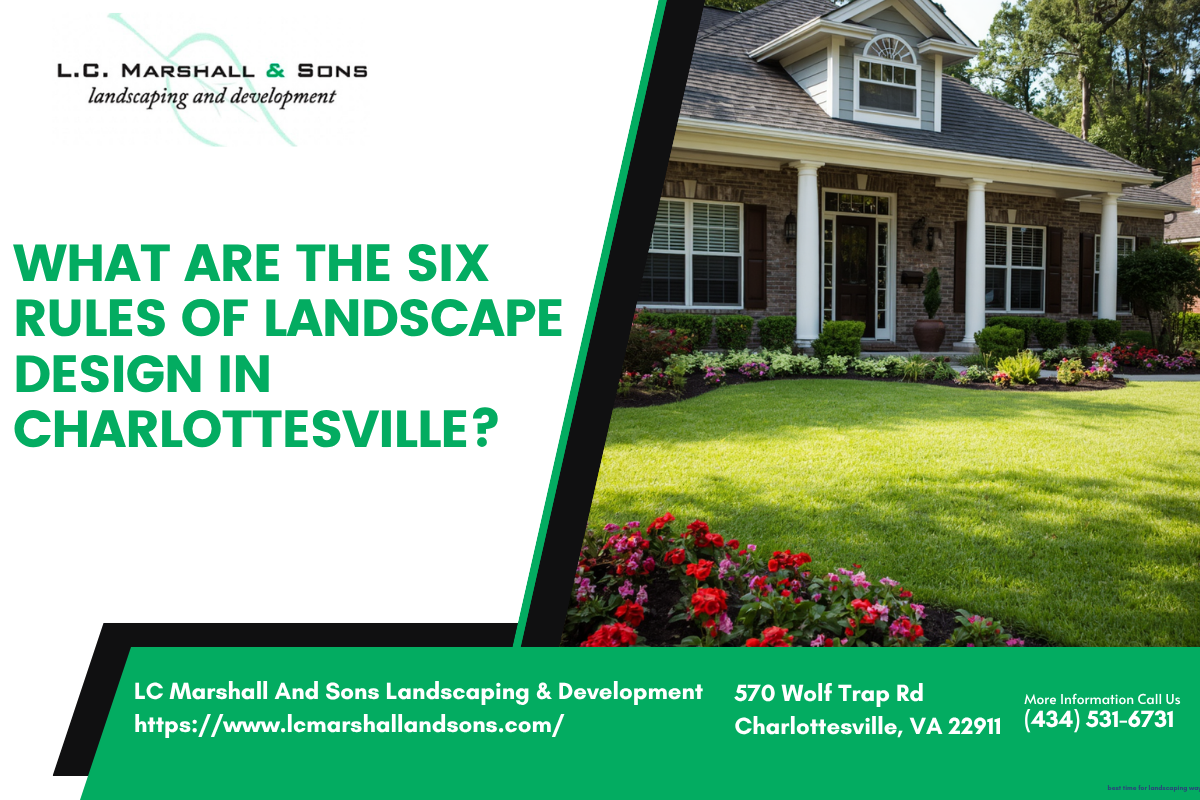
While the traditional seven principles of landscape design provide an artistic framework, they operate within a strict set of local requirements. For any significant residential landscape project in Charlottesville, these six rules are not just guidelines; they are the starting point from which all creative decisions must flow. Disregarding them can bring your project to a halt.
1. The 'Master List' Rule
Your creative freedom in plant selection is guided by a specific directive: choosing plants that will thrive here. The city maintains a Master Tree List and associated standards for plant selection. This isn't to stifle creativity, but to ensure that what is planted contributes positively to the local ecosystem. The list prioritizes Virginia native plants and other species well-suited for our USDA Hardiness Zone 7 climate and clay soil, ensuring your investment has the best chance of survival and requires fewer resources over time.
2. The Species Diversity Rule
A monoculture, where a single species dominates a landscape, is fragile and susceptible to pests and disease. To promote a resilient urban forest and a healthy ecosystem, Charlottesville's regulations require that property owners maintain species diversity. This means that for new plantings, you cannot simply line your property with a single type of tree or shrub. Specifically, the city requires that no more than 50% of new plantings are of the same species to promote biodiversity. This rule encourages a more thoughtful softscape design, incorporating a variety of specimen trees, deciduous trees, and evergreen shrubs for four-season interest.
3. The '8-Inch DBH' Rule
Before you or your landscape planners can even sketch out the location of a new paver patio or retaining wall, you must account for the mature trees already on your property. This is perhaps the most critical rule dictating site layout. In Charlottesville, developers and homeowners are required to submit a Tree Protection Plan to prevent damage to trees during construction, particularly those with an 8-inch DBH (Diameter at Breast Height) or larger as outlined by city regulations. This means a significant, mature tree is a legally protected focal point, and the entire master plan for your outdoor living space must be designed around its preservation.
4. The Permit-First Principle
Thinking of removing a large tree to make space for an outdoor kitchen or fire pit? In Charlottesville, that decision is not yours alone. The preservation of the city's tree canopy is a legal priority. Any action that involves the removal of protected trees or construction near them requires a permit. This is not a suggestion but a legal prerequisite. This principle ensures that any changes to the landscape are reviewed and approved, protecting both the homeowner from future liabilities and the community's environmental assets. A professional design-build firm will handle this process, ensuring all plans are compliant before a single shovel breaks ground.
5. The 'Natural Rainfall' Mandate
Our region enjoys a temperate climate, but water is a precious resource. To promote water conservation and create low-maintenance gardens, Charlottesville regulations stipulate that new trees must be suited to local conditions and able to thrive on natural rainfall once established according to the city's tree regulations. This rule fundamentally shapes a sustainable Charlottesville landscape. It pushes design away from thirsty, high-maintenance plants and elaborate irrigation systems toward drought-tolerant landscaping and xeriscaping principles. The goal is to create a beautiful space that works with our local climate, not against it.
6. The Watershed Protection Rule
Every property in Charlottesville is part of a larger watershed. How you manage water on your land has a collective impact. Local regulations, guided by documents like the Charlottesville Standards and Design Manual, emphasize proper site grading and drainage solutions to manage stormwater runoff. An informed landscape design can positively impact water quality, wildlife, and long-term management at the individual residence level which collectively impacts the larger community and watershed. This means your design should incorporate elements like permeable surfaces, rain gardens, or bioswales to help slow down and filter rainwater, improving soil health and protecting our streams and rivers.
Key Factors for Choosing Your Landscape Partner
Navigating these rules while creating a beautiful, functional, and cohesive design requires specialized expertise. When selecting a professional landscaper for your home, look beyond a portfolio of pretty pictures. The success of your project depends on their proficiency in these critical areas.
Compliance with Local Tree and Development Codes
This is non-negotiable. A firm's ability to interpret and adhere to city ordinances from the outset is the difference between a smooth project and one mired in costly delays and stop-work orders. They must understand the permit process intimately and design within the established legal framework.
Expertise in Local Ecology and Native Plants
Your partner must be more than a designer; they must be a local horticulture expert. They need to understand Central Virginia's clay soil, know which deer-resistant plants will actually survive, and be able to select species from the city's Master List that will create the aesthetic appeal you desire while meeting regulatory and environmental demands.
Ability to Design for Water Conservation
Ask potential partners how they approach the 'Natural Rainfall' mandate. The best landscape planners will champion drought-tolerant and native plantings not as a limitation, but as the foundation for a resilient and low-maintenance garden that offers year-round beauty without excessive watering.
Adherence to the Charlottesville Standards and Design Manual
The Charlottesville Standards and Design Manual serves as the official set of operating guidelines for all development within the city according to official city resources. A firm that is deeply familiar with this document can anticipate requirements, streamline the approval process, and ensure every element of your project—from foundation plantings to patios and walkways—is fully compliant.
Making the Right Choice for Your Needs
Understanding these local rules allows you to partner with a landscape firm to create a space that is not only beautiful but also sustainable, compliant, and a true asset to your property. The "best" approach depends entirely on your specific goals.
For the Property Developer
Your primary focus is on compliance to avoid costly delays and ensure a smooth build. Prioritize the Permit-First Principle and the '8-Inch DBH' Rule. A compliant Tree Protection Plan is the first step to a successful project timeline. Working with a landscape design firm that has a proven track record with the city's planning department is essential for securing permits efficiently.
For the Eco-Conscious Homeowner
You want a landscape that is an extension of the natural beauty of Charlottesville. Your priorities align with the 'Master List' Rule and the Watershed Protection Rule. Focus on using Virginia native plants to create pollinator gardens and habitats that support local wildlife. A design incorporating rain gardens and other sustainable drainage solutions will provide personal satisfaction and a tangible environmental benefit.
For the Low-Maintenance Resident
You desire a beautiful outdoor space without the burden of constant upkeep. The 'Natural Rainfall' Mandate is your guiding principle. Seek a design that heavily features drought-tolerant perennials, ornamental grasses, and ground cover. By selecting plants that thrive on their own once established, you create a self-sufficient and stunning landscape that gives you more time to simply enjoy your home.
Ultimately, creating a successful, high-end landscape in Charlottesville is a collaborative process between your vision and our local expertise. It requires a partner who can balance the art of design with the science of horticulture and the legal requirements of our city. For a personalized assessment of your property and to explore how we can bring your vision to life within these important local rules, contact our team of experienced landscape planners today.

Featured Posts