TABLE OF CONTENTS
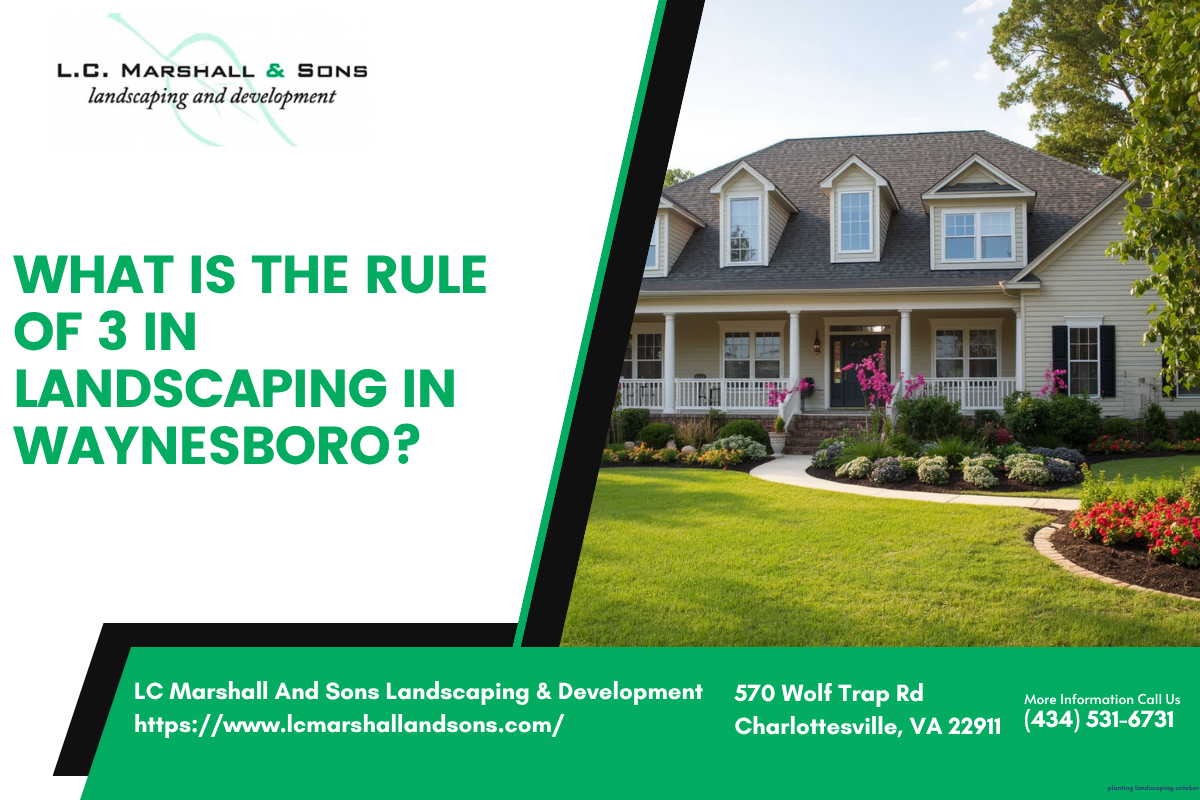
For Waynesboro homeowners, the rule of 3 in landscaping is more than just an aesthetic trick of using odd numbers. A trusted Waynesboro landscaping company can use this strategic approach by grouping native plants, repeating those groups, and layering them vertically to create a vibrant, low-maintenance, and ecologically sound outdoor space that serves as a complete habitat.
The Classic Rule of 3: A Foundation in Design
You’ve likely heard a landscape contractor or garden designers mention the importance of planting in threes, fives, or sevens. This is the traditional “Rule of 3,” or more broadly, the Rule of Odds. At its core, this is a fundamental design principle used by professionals to create a more natural and visually appealing feel in a garden. The human eye tends to pair things up, so planting in even numbers can create unintended symmetry or a formal look. According to landscape designers, planting in odd numbers forces the eye to move around the grouping, creating a more casual, harmonious, and less "staged" composition. This principle applies not only to plants like hostas or boxwoods but also to hardscaping elements like boulders or ornamental trees.
This approach works. It creates balance and proportion, avoids stark symmetry, and establishes visual interest. But in our experience working with landscapes across the Shenandoah Valley, we’ve found this is only the first step. For a yard to truly thrive in our local environment, we need to evolve this principle beyond simple aesthetics.
An Evolved Framework: The Rule of 3 for Sustainable Waynesboro Landscapes
For modern homeowners in Waynesboro, the Rule of 3 is not just about *how many* plants you group together; it's a comprehensive strategy for building a resilient and ecologically valuable landscape. We’ve redefined it into a three-part framework that elevates your yard from a simple collection of plants to a cohesive, functioning ecosystem.
Part 1: The Native Plant Trio
Instead of just picking three of the same plant, the first step is to select a trio of different Pennsylvania-native plants that work together synergistically. A successful native plant trio should offer a combination of form and texture, provide food and shelter for local wildlife, and ensure seasonal interest throughout the year. By using plants that evolved in our Augusta County climate, you create foundation plantings that are naturally drought-tolerant, pest-resistant, and require far less intervention than non-native species. This is the cornerstone of low maintenance landscaping.
Part 2: Rhythm and Repetition with Trios
Once you have your core native trio, the second part of the framework is to repeat this grouping—or variations of it—across your landscape. This repetition creates a sense of harmony and unity, tying the entire garden design together. You might place one trio near your patio, another along a walkway, and a third in a garden bed visible from a window. This rhythm guides the eye through the space, making your yard feel intentional and well-designed, not chaotic. This is mass planting done intelligently.
Part 3: Three Vertical Layers for a Complete Habitat
The final, and perhaps most crucial, part of this evolved rule is to ensure your planting design incorporates three distinct vertical layers. A healthy ecosystem isn't flat; it has depth and dimension. For a thriving yard, you need:
- The Ground Layer: This includes groundcovers, perennials like coneflowers, and low ornamental grasses. This layer provides food for pollinators and shelter for small creatures.
- The Shrub Layer: This mid-level includes shrubs and small ornamental trees. This layer offers nesting sites for birds, berries for food, and critical cover from predators.
- The Canopy Layer: This consists of larger, mature trees that provide shade, cool the air, and serve as essential habitat for a wide range of birds and insects.
By consciously planning for these three layers, you move beyond simple planting and begin true habitat creation, transforming your lawn into a vibrant part of the local ecology.
A Practical Example: The "Waynesboro Native Trio"
Let's make this tangible. Here is a perfect example of a native plant trio that thrives in our local Waynesboro soil and climate, providing a beautiful three-season garden display while supporting pollinators.
- Purple Coneflower (Echinacea purpurea): This iconic perennial provides stunning summer blooms that are a magnet for bees and butterflies. Its sturdy seed heads remain through winter, offering a food source for goldfinches.
- Black-Eyed Susan (Rudbeckia hirta): With its cheerful yellow petals and dark center, this plant offers a beautiful color contrast to the coneflower. It blooms from mid-summer into fall, extending the season of interest and providing nectar for late-season pollinators.
- Swamp Milkweed (Asclepias incarnata): While many know Common Milkweed, Swamp Milkweed is often better behaved in a garden setting. It's the essential host plant for Monarch butterfly caterpillars and produces fragrant pink flower clusters that attract a huge diversity of beneficial insects.
When you plant these three species together in a grouping—say, three coneflowers, three black-eyed susans, and a milkweed plant—you create a powerful ecological hub. Repeating these groupings throughout your garden beds amplifies their impact, creating a beautiful and functional outdoor living space.
From Garden to Certified Habitat: A Tangible Goal
Following this evolved Rule of 3 does more than just enhance your curb appeal; it puts you on the path to a significant achievement. By providing food, water, cover, and places for wildlife to raise their young using native plants, you can meet the criteria for a remarkable designation. The National Wildlife Federation will recognize a wildlife-friendly garden as a Certified Wildlife Habitat®. This certification is a wonderful way to showcase your commitment to sustainability and can even add value to your property.
The impact is scientifically proven. Research shows that native habitat gardens can support two times the amount of wildlife when compared to properties with primarily turf lawn. By converting even a small portion of your lawn into a layered, native plant landscape, you are making a measurable difference.
Comparing Landscaping Philosophies: Aesthetic vs. Ecological
When planning a yard makeover, homeowners often face a choice between two primary approaches. Here’s how they stack up when viewed through the lens of the Rule of 3.
Traditional Aesthetic Landscaping (Rule of 3 as a Design Trick)
This approach prioritizes immediate visual harmony and a classic, manicured look. The Rule of 3 is used strictly for grouping plants (often non-natives like hydrangeas or boxwoods) in odd numbers to create a pleasing composition. The focus is on color theory, form, and creating a specific "look" without deep consideration for the local ecosystem.
- Pros: Can create a highly formal and controlled aesthetic. Wide variety of plant choices available from any garden centers. The principles are straightforward to apply.
- Cons: Often requires more maintenance (watering, fertilizing, pest control) as non-native plants are not adapted to local conditions. Provides limited ecological value for local pollinators and wildlife. Can create a sterile "monoculture" that lacks biodiversity.
Ecological/Sustainable Landscaping (Rule of 3 as a Framework)
This philosophy uses the Rule of 3 as a strategic framework to build a resilient, multi-layered habitat that is both beautiful and functional. It prioritizes the use of native plants adapted to the Waynesboro area, focusing on creating a self-sustaining system that supports local wildlife. The aesthetic is often more naturalistic and dynamic.
- Pros: Significantly lower long-term maintenance requirements. Reduces the need for water, pesticides, and fertilizers. Actively supports biodiversity and local ecosystems. Creates a unique sense of place by using plants native to the Shenandoah Valley.
- Cons: The plant palette is limited to species native to the region. The aesthetic may look less formal or "tidy" than traditional designs, especially during establishment. Initial planning requires more thought and site analysis.
Key Factors for Your Waynesboro Landscaping Project
As you plan your project, several critical factors will influence your decisions and the long-term success of your landscape.
Aesthetic Appeal vs. Ecological Function
The good news is that this is not an either/or choice. A well-designed landscape using native plants can be stunningly beautiful, offering dynamic changes through the seasons that a static, non-native garden cannot match. The key is to shift the aesthetic focus from a static picture to a living, evolving system.
Long-Term Maintenance Requirements
This is where native plants offer a clear advantage. Once established, a garden filled with plants adapted to our local rainfall and soil requires significantly less work. You'll spend less time watering, fighting pests, and applying chemicals, and more time enjoying your outdoor space.
Sustainability and Support for Local Wildlife
Your yard is not an island. It's part of a larger ecosystem. Choosing to landscape with native plants is a direct investment in the health of local bird, bee, and butterfly populations, contributing to a healthier environment for the entire Waynesboro community.
Use of Native vs. Non-Native Plants
While some non-native plants can be benign, others can become invasive, out-competing native species and disrupting the food web. A thoughtful residential landscaping plan, guided by horticultural expertise, will always prioritize native selections found at reputable local nurseries.
Adherence to Local Waynesboro Regulations
It's crucial to understand that landscaping isn't just about plants. If your project involves hardscaping elements like a three-tiered retaining wall, a new patio, or even large boulders, you need to be aware of local rules. For instance, in Washington Township, which includes Waynesboro, PA, all structures—even temporary ones—require a Land Use Permit before construction begins. This is different from other areas; for example, in Alexandria, VA, a permit is required just to plant or remove a tree from a public right-of-way. Knowing the specific local regulations is essential for a smooth project, which is why working with an experienced landscape contractor is so valuable.
Common Landscaping Questions Answered
As professionals in landscape design, we often hear the same questions from homeowners. Here are clear answers to some of the most common ones.
What are the most common landscaping mistakes to avoid?
The biggest mistake is a lack of a cohesive plan. This often leads to impulse buys at garden centers, resulting in a random collection of plants that don't work well together. Other common errors include planting too close to the house foundation, ignoring the mature size of plants and trees, poor soil preparation, and creating a high-maintenance design that doesn't fit your lifestyle.
What is the 70/30 garden rule?
This is another useful design guideline, suggesting that about 70% of your garden plantings should be structural (shrubs, ornamental trees, evergreens) and 30% should be accent plants (perennials, annuals). This creates a strong "backbone" for your garden that provides year-round interest, with the smaller percentage providing seasonal color and flair.
What is the rule of thirds in landscape design?
While often confused with the Rule of 3 (or Rule of Odds), the Rule of Thirds is a composition principle borrowed from photography and art. Imagine your yard is divided into a 3x3 grid. The Rule of Thirds suggests placing key focal points—like a specimen tree, a boulder, or a vibrant plant grouping—at the intersections of these grid lines, rather than dead center. This creates a more dynamic and engaging visual experience.
Making the Right Choice for Your Needs
The best landscaping approach depends entirely on your personal goals, property, and lifestyle. There is no single "best" solution, but we can guide you to the right philosophy for your needs.
The Eco-Conscious Homeowner
Your priority is creating a natural habitat and supporting local wildlife. The ecological framework of the Rule of 3 is perfect for you. Focus on selecting diverse native plant trios, building all three vertical layers, and pursuing the National Wildlife Federation's Certified Wildlife Habitat® designation as a tangible goal.
The Low-Maintenance Seeker
You want a beautiful yard without the weekend-consuming chores. The sustainability of the ecological approach will serve you best. By using native plants adapted to our climate, you will drastically reduce the time spent on watering, fertilizing, and pest management. The initial investment in a smart design pays off for years in saved time and effort.
The Curb Appeal Maximizer
Your main goal is a visually stunning landscape that boosts your property's value. You can achieve this with either approach, but the ecological framework offers a modern, sophisticated edge. A beautiful, sustainable landscape that is also a certified habitat is a powerful selling feature. It demonstrates thoughtful design and appeals to today's environmentally aware buyers.
Ultimately, transforming your outdoor space should be an exciting and rewarding process. By moving beyond the simple idea of planting in odd numbers and embracing the Rule of 3 as a powerful framework for habitat creation, you can build a landscape in Waynesboro that is not only beautiful and easy to care for, but also a vital contribution to our local environment. For homeowners in the greater Charlottesville, VA area seeking a personalized site analysis and expert landscape installation, the team at LC Marshall And Sons Landscaping is here to help you create a landscape that meets your goals. Contact us today for a consultation and a free quote to begin your yard makeover.

Featured Posts