TABLE OF CONTENTS
In Charlottesville, the 'rule of 3' in landscaping extends beyond the classic design principle of grouping plants in odd numbers. It requires a crucial balance of aesthetic harmony, adherence to local tree canopy ordinances, and the selection of native plants suited for our Central Virginia ecology and challenging clay soil.
The two 'rules' of Charlottesville landscaping: Design aesthetics and city mandates
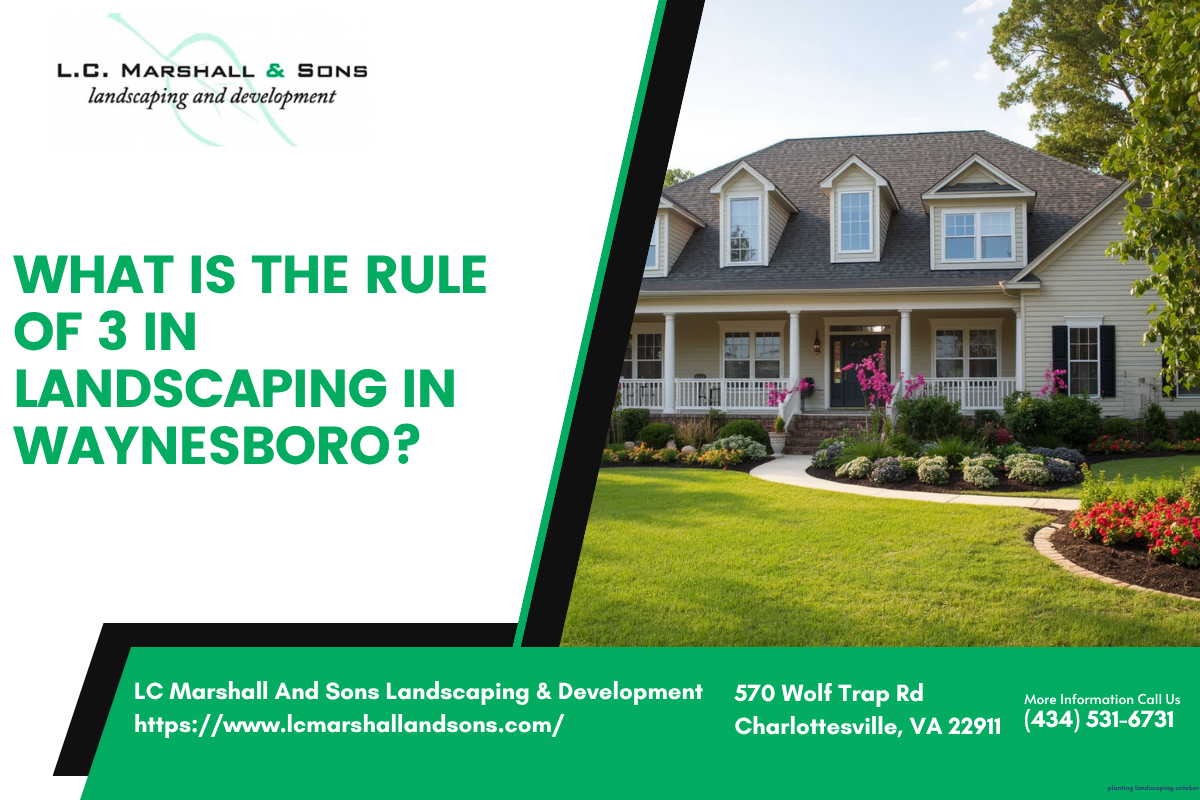
When homeowners in Albemarle County ask us about the "rule of three," they are usually referring to a classic principle of garden design. This concept, which favors groupings in odd numbers, is a powerful tool for creating visual interest and a sense of natural harmony in any garden. Just as the rule of thirds in photography creates a balanced composition, using odd number groupings of plants allows the eye to perceive a more organic and less rigid arrangement. It avoids the formal symmetry of pairs, encouraging the eye to move through the space.
This design concept is far from new. It first entered the public consciousness in 1797 when John Thomas Smith wrote about creating balance in paintings by using light and dark, according to his book Remarks on Rural Scenery. In landscape design, this translates to using a visual triangle to arrange plants or hardscape elements, creating a focal point that feels both intentional and uncontrived. You see this in well-designed foundation plantings, perennial borders, and even in the placement of garden boulders.
However, for any property in Charlottesville, there is a second, more critical trifecta at play. It’s a framework that balances universal design principles, our local ecology, and the city’s specific legal requirements. The most significant of these is the tree canopy ordinance. In our region, landscaping isn't just about curb appeal; it's about environmental stewardship and regulatory compliance. The Code of Virginia allows localities to enact powerful environmental protections. Specifically, for residential sites, ordinances can require that a development plan provides a minimum 20% tree canopy coverage at 20 years maturity as outlined in the state code. This mandate is the true starting point for any significant landscape project in Central Virginia.
From compliance to composition: Using native trees to meet canopy requirements
The requirement for tree canopy coverage can seem daunting, but it's actually an opportunity to create a stunning, naturalistic landscape. This is where the aesthetic rule of odds and the legal rule of canopy beautifully intersect. Instead of planting a solitary tree in the middle of a lawn, we can use the principle of asymmetrical balance to create a grouping of three or five native trees.
Imagine a gentle curve in your backyard design, anchored by a cluster of three Eastern Redbud trees. Their magnificent spring color creates a powerful focal point. In another area, a small grove of five Flowering Dogwood trees can provide a beautiful understory beneath larger, existing oaks, contributing significantly to your canopy goal while creating a serene, woodland feel reminiscent of the Blue Ridge Mountains foothills.
This approach achieves several goals simultaneously:
- Meets Legal Requirements: Grouping trees allows you to strategically meet the 20% canopy target efficiently. A planting plan designed by experienced landscape architects can calculate the mature spread of selected species to ensure compliance.
- Creates Visual Harmony: Using odd number groupings creates a more natural look than a simple row. This repetition in design, using similar forms and textures, brings a sense of rhythm and cohesion to the garden layout.
- Enhances Ecological Value: Planting native trees in groves or clusters mimics their natural growth patterns, providing better habitats for local wildlife and creating effective pollinator gardens.
Beyond trees: Applying the rule of 3 to your entire landscape
A successful landscape design in Charlottesville treats the mandated tree canopy as the "ceiling" of the outdoor room. The next step is to furnish the space underneath with thoughtful softscape and hardscape elements, consistently applying the rule of three to create a cohesive design.
Understory plants and perennial borders
Beneath your canopy trees, you can create beautiful shade gardens. A cluster of three large Oakleaf Hydrangea shrubs can provide magnificent texture and form with four-season interest. In a sunnier spot, a drift of five or seven Virginia Sweetspire shrubs offers fragrant summer blooms and stunning fall color. When designing perennial borders, we often plant in groups of three, five, or more, allowing the plants to weave together for a fuller, more cottage garden style appearance, a nod to the historical influence of Monticello Gardens on local aesthetics.
Hardscape elements and outdoor living spaces
The principle isn't limited to plants. Hardscape elements provide the structure for your garden. A walkway design might feature three large stepping stones leading to a patio. On that patio, you might find a cluster of three garden boulders of varying sizes, providing seating and a sculptural focal point. Even container gardening on a deck or patio benefits from this rule. A common technique for planters is the "Thriller, Filler, Spiller" method, which uses three distinct plant types to create a full and dynamic arrangement. By applying these landscape design principles to both plants and hardscape, you create a unified outdoor living space that feels both elegant and inviting.
Smarter planting for Charlottesville: A practical guide
Choosing the right plants is essential for a landscape that not only complies with regulations but also thrives in our specific environment. Charlottesville is in USDA Hardiness Zone 7a, characterized by hot summers and moderately cold winters. Our notoriously heavy clay soil requires careful plant selection and soil amendment.
Here are key considerations for a successful planting plan:
- Prioritize Virginia Native Plants: Species like the Flowering Dogwood, Eastern Redbud, various oaks, and River Birch are adapted to our climate and soil. They require less water and fertilizer once established and provide critical food and shelter for local wildlife.
- Consider Deer Pressure: In many Charlottesville neighborhoods, from Bellair to Keswick, deer can be a significant challenge. Selecting deer-resistant plants is crucial for low-maintenance landscaping and protecting your investment. Ornamental grasses, many ferns, and certain shrubs like boxwood are excellent choices.
- Plan for Scale and Proportion: A common mistake in DIY landscaping is choosing plants that will outgrow their space. It's vital to consider the mature size of trees and shrubs in relation to your home and property lines, ensuring the final plant scale and proportion are correct.
- Embrace Four-Season Interest: A great garden offers visual appeal year-round. Select a mix of plants that provide a sequence of blooms, interesting foliage, winter structure, and fall color to ensure your front yard landscaping has constant curb appeal.
Key factors for your Charlottesville landscape project
When planning your project, it’s vital to weigh the different facets of a truly successful design. Moving beyond simple aesthetics to a more holistic approach ensures long-term value and enjoyment.
Aesthetic Appeal and Design Harmony
This is the immediate goal for most homeowners. The aesthetic 'Rule of 3' is a powerful tool for achieving a natural, balanced look. However, true harmony comes from a design that integrates color harmony, texture, and form in a way that complements your home’s architecture, whether it's a colonial design near the University of Virginia or a more modern home.
Compliance with Local and State Environmental Regulations
This is non-negotiable for new construction or significant renovations. Failing to meet tree canopy requirements can lead to costly project delays and fines. This focus on environmental rules is part of a larger national trend; in 2015, a federal interagency review called 'The Mitigation Rule Retrospective' highlighted the importance of regulations that compensate for environmental impacts, a principle that informs local policies like our canopy ordinances.
Adherence to Hyper-Local Rules (HOA Standards)
Beyond city and county rules, your Homeowner's Association has significant authority. It's crucial to consult your HOA's architectural review board before any work begins. For example, in some communities like The Courtyard at Redfields, their guidelines state that 'no plantings or removal of plants, trees or shrubs shall take place' without prior approval. This layer of oversight protects community aesthetics and property values.
Ecological Sustainability and Long-Term Viability
A successful landscape is one that endures. This means choosing plants that will thrive in our clay soil, designing for proper drainage to manage stormwater, and creating a sustainable garden that supports the local ecosystem. This approach reduces long-term maintenance costs and creates a healthier environment.
Making the right choice for your needs
Understanding these interconnected rules empowers you to make a confident decision. The best approach depends on your specific goals and property.
The New Homeowner
Your focus is on creating a beautiful and functional space to call home. You may not be aware of the nuances of canopy laws or the challenges of our local soil. Your best path is to develop a cohesive master plan from the start. This prevents costly mistakes, like planting trees that will interfere with utilities or choosing plants that won't survive their first summer. A professional plan will balance your aesthetic desires with all the underlying legal and ecological requirements.
The Eco-Conscious Gardener
You prioritize creating a landscape that works with nature, not against it. The Charlottesville framework is perfectly aligned with your goals. By focusing on groupings of Virginia native plants to meet canopy requirements, you are inherently building a sustainable garden. This strategy naturally creates pollinator gardens, reduces water usage, and provides a habitat that strengthens the local ecosystem.
The Property Developer
Your primary concern is compliance, budget, and return on investment. Viewing the landscaping requirements not as a hurdle but as an integrated part of the design process is key. Proactively designing a plan that meets or exceeds the 20% canopy ordinance using attractive, hardy plants is the most efficient path. It streamlines the approval process and creates immense curb appeal, directly increasing the market value of the property.
Ultimately, transforming your outdoor space in Charlottesville from a simple yard into a beautiful, compliant, and sustainable landscape requires a thoughtful approach. It’s about understanding that the most enduring designs are those that masterfully weave together aesthetics, ecology, and local regulations. For a personalized consultation to discuss your property's unique potential, contact the expert team at LC Marshall And Sons Landscaping today.

Featured Posts